
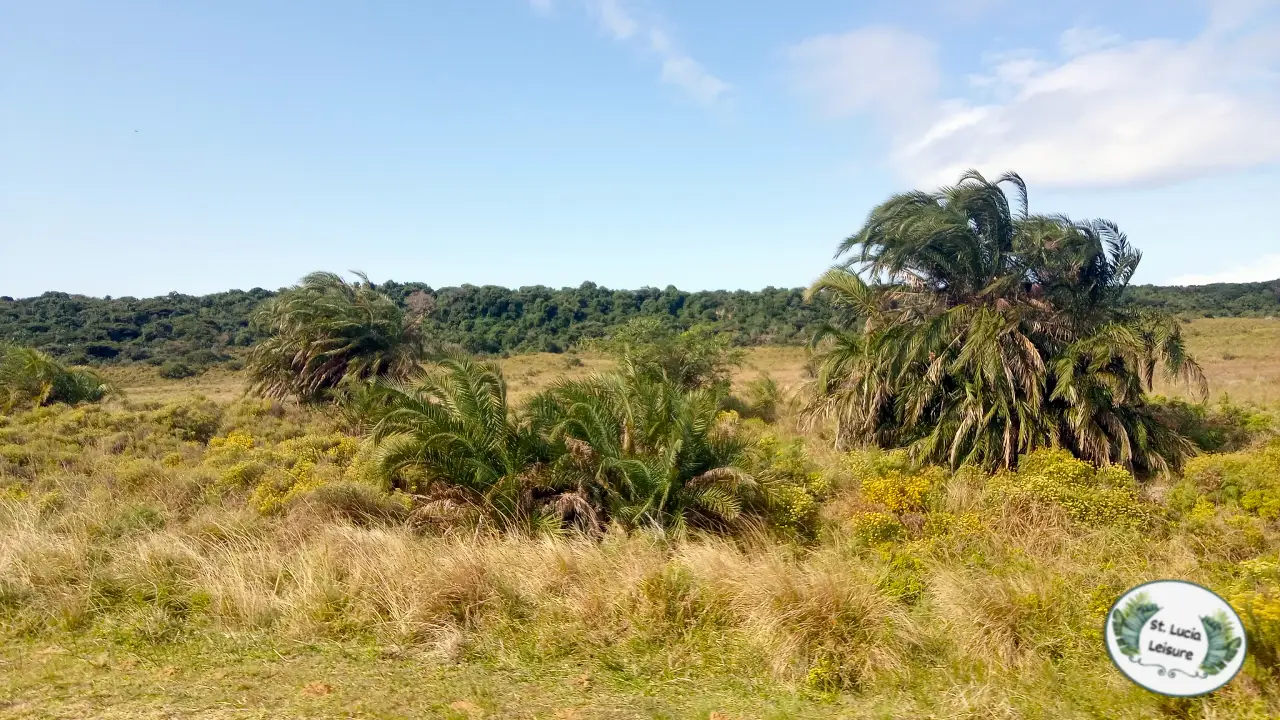
Travel through the coastal grasslands and wetland fringes of St Lucia, and you will quickly notice a distinctive leaning silhouette. This is Phoenix reclinata, commonly known as the wild date palm or iSundu in isiZulu. Far from being just another scenic tree, this indigenous palm serves as a vital ecological cornerstone across the iSimangaliso Wetland Park.
First, Phoenix reclinata thrives where other trees struggle. It flourishes along high-water tables, riverbanks, and swamp margins, often forming dense, protective clusters. Its extensive root systems anchor sandy soils and stabilize vulnerable wetland banks against seasonal flooding. Because it binds soil so effectively, it helps preserve the delicate hydrological balance of our coastal lakes and estuaries.
Furthermore, the wild date palm provides a dependable lifeline for local wildlife. During fruiting season, bright orange date clusters attract an astonishing variety of creatures. For example, samango monkeys, baboons, and trumpet hornbills feed voraciously on the sweet pulp. On the forest floor, bushbuck, nyala, and bushpigs forage on fallen dates, dispersing seeds throughout the park. Even elephants frequently feed on the nutritious palm hearts and fronds.
Beyond ecology, Phoenix reclinata holds deep cultural importance for rural Zululand communities. Skilled local crafters harvest the durable fronds to weave traditional baskets, sleeping mats, and sun hats. In addition, traditional communities tap the sap to produce customary palm wine.
Our conservation volunteers often encounter these remarkable groves while conducting biodiversity surveys and habitat assessments with Shakabarker Tours and Safaris. Protecting species like Phoenix reclinata ensures that both our wildlife and indigenous heritage continue to flourish. Look for its arching fronds on your next safari drive, and appreciate the silent work this hardy palm does for Zululand.
Contact us HERE or us the WhatsApp button for a direct line to us.
AI SEO GEO by The Sardine News.
Leave a Reply